
Buying a used electric car? Ask about the battery before you agree the purchase. A tidy interior, low mileage and a full charge are useful things to see, but they do not give you a complete picture of the high-voltage battery’s condition.
A battery health check gives you more evidence to consider alongside the vehicle’s history, condition and asking price. At Carbon Clean Co, our £99 mobile EV battery testing service uses Generational+ technology to help you understand a supported vehicle’s battery before you buy.
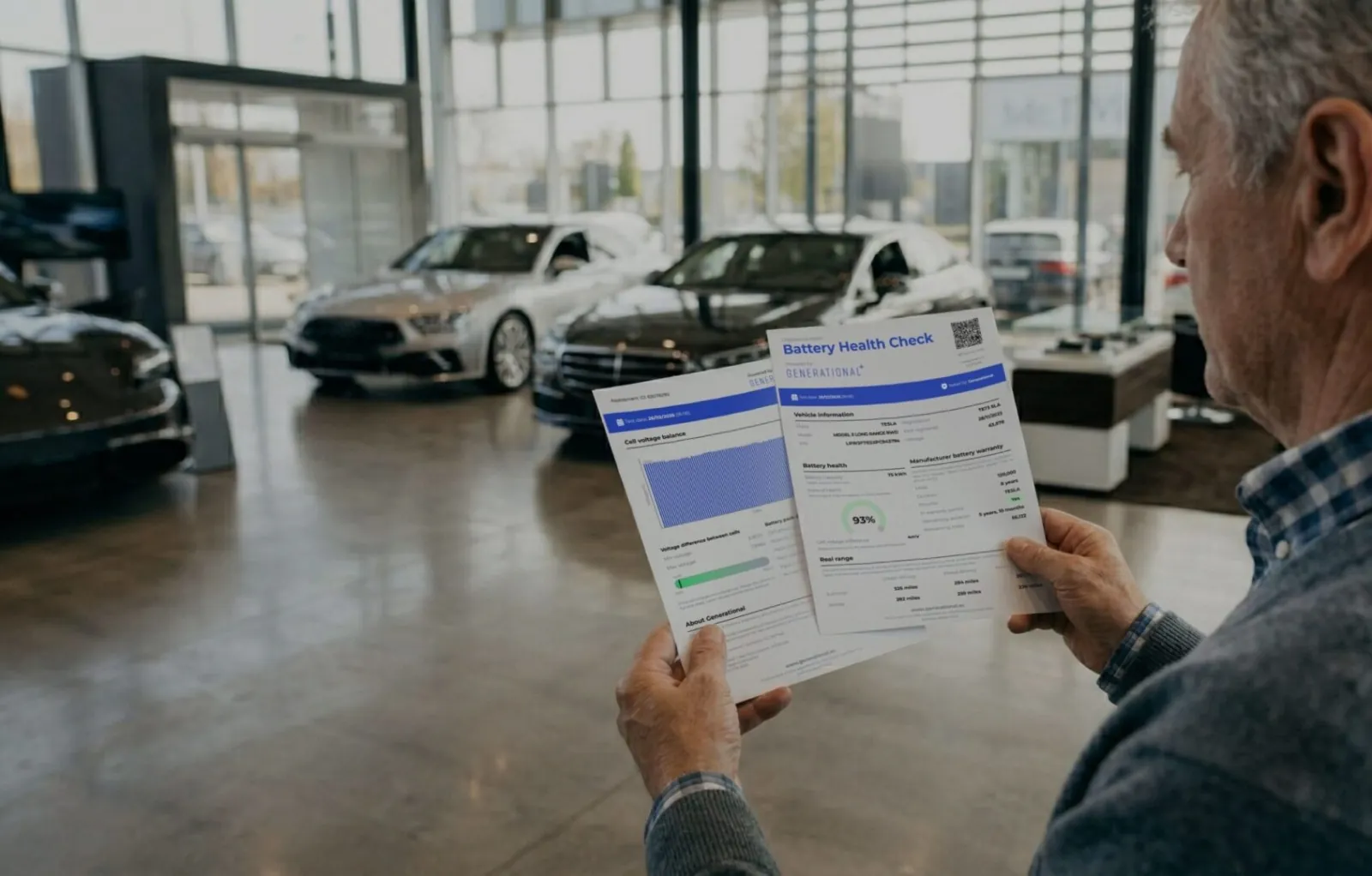
A full charge is not the same as a healthy battery
The charge percentage on the dashboard tells you how full the battery is now. State of Health (SoH) describes its usable capacity compared with when it was new. A battery can be fully charged while holding less energy than it originally did.
For example, a 90% SoH reading broadly indicates around 90% of the original usable capacity. It does not mean the battery has exactly 90% of its life left, or that it will deliver exactly 90% of the advertised range. The reading needs to be interpreted in context.
Why age and mileage are only part of the story
Two EVs of the same age and mileage can have different battery condition. A vehicle-specific check gives you information about the car in front of you, rather than relying entirely on a model’s reputation or the seller’s description.
There is no single battery health percentage that makes every used EV a good or bad purchase. Consider the result alongside the vehicle’s age, price, warranty and the journeys you need it to make.
What can a battery health report tell you?
Using Generational+ technology, we read supported battery data through the diagnostic connection and provide a battery health certificate. Depending on the vehicle and available data, it can include State of Health, capacity information, estimated range, manufacturer battery warranty information and cell-voltage balance.
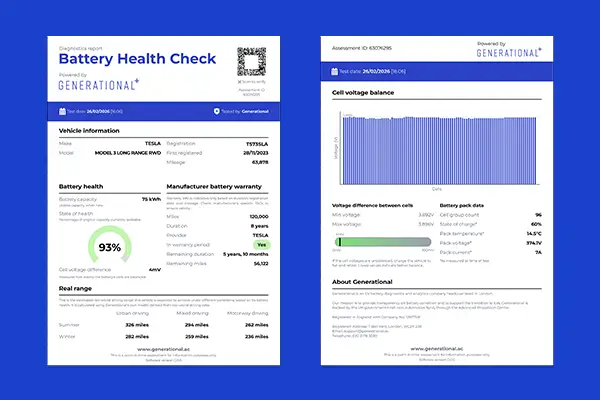
Ask whether a report is recent and matches the vehicle’s details. Discuss any unclear findings before committing. A certificate records an assessment at a particular time; it is not a guarantee of future battery performance or a replacement for a full vehicle inspection.
Will the car’s range suit your everyday journeys?
Think about your usual commute, longer journeys and where you will charge. Leave some margin rather than choosing a car whose quoted range only just covers your needs. Temperature, speed, heating and driving style affect the range you actually achieve.
Your used-EV viewing checklist
- Request a battery health report: check its date, vehicle details and what was assessed.
- Confirm the battery warranty: ask about remaining time and mileage, conditions and whether cover transfers to you. Verify the details with the manufacturer.
- Check battery ownership: some older EVs have separate battery lease arrangements. Establish what is included in the sale.
- Check charging arrangements: confirm the connector type, included cables and how the car fits your home or public charging options.
- Review the whole vehicle: check its history, tyres, brakes, warning lights and general condition, and arrange a suitable inspection where needed.
Further reading: Generational’s battery health guide and the RAC electric-car buyer’s guide.